
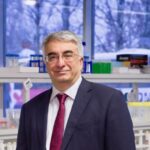
Professor Alireza Fazeli
President
Alireza is leading lab groups at the Estonian University of Life Sciences, the University of Tartu, and the University of Sheffield. Fazeli lab is focused on human, animal, and plant extracellular vesicles research. Alireza hopes that his research makes a difference in day to day lives of ordinary people.
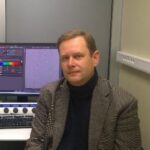
Professor Augustas Pivoriūnas
Treasurer
Augustas Pivoriūnas leads an active group of scientists and PhD students in the State Research Institute Centre for Innovative Medicine, Lithuania. His research interests focus primarily on extracellular vesicles (EVs) derived from different types of adult stem cells and their applications in basic research and cell-based therapies.

Professor Reet Kurg
Board member
Reet Kurg is a Professor of Molecular Biomedicine and Director of the Institute of Technology at the University of Tartu. Her current research is dedicated to understanding of the biological functions and underlying regulatory mechanism of cancer testis antigens MAGEA proteins expression in cancer cells. She is active in the field of extracellular vesicles (EVs) with the aim of finding biomarkers for melanoma diagnostics and generating EVs with desired properties. More: https://kurglab.ee/

Professor Aija Linē
Board member
Aija Linē is the head of the Cancer Biomarker group and the scientific director of the Latvian Biomedical Research and Study Centre and a professor of molecular genetics and immunology at the University of Latvia. Her group is studying various aspects of EVs involvement in cancer, such as, what messages cancer cells are sending to each other and to normal cells, and what can we learn about cancer if we manage to hijack these messages? More recently, the group started to explore the molecular cargo and functional effects of exercise-induced EVs in cancer.

Aistė Jekabsone
Board member
Aiste Jekabsone is CEO and co-founder of UAB Exolitus and a senior scientist in the Laboratory of Preclinical Drug Investigation of the Institute of Cardiology, Lithuanian University of Health Sciences (LSMU, Kaunas, Lithuania). She holds a PhD in Biology (from LSMU) and was a MSCA Postdoc fellow at the University of Cambridge (UK), Biochemistry Department. She currently focuses on translational research in extracellular biology and energetic metabolism, exploring the impact of extracellular matrix and particle signalling via mitochondrial pathways. At Exolitus, her team develops human, mammalian, plant and mushroom cell-derived nanoparticle therapeuticals, cosmeceuticals and nutraceuticals.

Vladimirs Pilipenko
Board member
Vladimirs is a postdoctoral researcher in the field of Neuropharmacology at the Faculty of Medicine, University of Latvia. He is investigating the repurposement of antidiabetic drug metformin to treat Alzheimer’s disease-type changes in the rat brain. Vladimirs has also worked in collaboration with Professor Augustas Pivoriūnas to decipher the neuroprotective effects of extracellular vesicles in rats with experimental Parkinson’s disease. Vladimirs is the Vice-President of the Latvian Society of Pharmacology, and is a member of Federation of European Neuroscience Societies (FENS) and European College of Neuropsychopharmacology (ECNP).
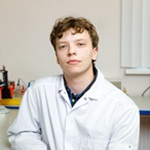
Miks Priedols
Board member
Miks is currently completing a master’s degree in biology and has several years of hands-on experience in EV research, including the development of an A4F-based device for EV isolation from urine and cell culture medium and miRNA profiling of lung cancer patient bronchoalveolar lavage fluid samples to identify cancer-associated signatures. His current work focuses on engineering aptamer-conjugated EVs for targeted delivery to pancreatic cancer and on developing a device that uses electromagnetic fields to stimulate EV production in hollow fiber bioreactors. Miks works at the National Institute of Research and Innovation in Latvia, under the supervision of Dr. Karīna Narbute and Dr. Artūrs Ābols.
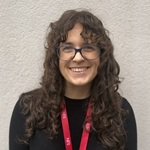
Lilite Sadovska
Board member
Lilite Sadovska, PhD, is a young researcher at the National Institute of Research and Innovation in Latvia. She earned her PhD in Molecular Biology from the University of Latvia, focusing on the diverse roles of extracellular vesicles in cancer development. With over a decade of research experience in oncology and cellular cross-talk, her current work focuses on pioneering cutting-edge workflows, including spatial multiomics and organ-on-chip platforms.
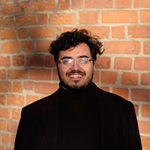
Deep Bhattacharya
Board member
Deep Bhattacharya has a Master’s in Biotechnology from Lund University in 2023, specializing in Synthetic Biology, Probiotics, and Bioprocessing. During his Master’s studies, Deep demonstrated notable expertise by securing a gold medal at iGEM, the World Synthetic Biology Competition. His project involved developing a probiotic for bees to address the impact of glyphosate on the declining bee population. Additionally, his master’s thesis concentrated on the production and characterization of spider silk protein (Cyllindroform Spidroin), showcasing proficiency in diverse biotechnological applications. Currently, Deep Bhattacharya is a Juniour research fellow at the Estonian University of Life Sciences under the Combivet ERA Chair, working under the guidance of Dr. Suranga Kodithuwakku and Dr. Alireza Fazeli. His research focuses on investigating the role of milk and algae derived extracellular vesicles in anti-inflammatory and immunomodulatory diseases.
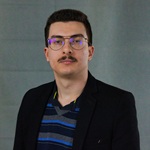
Board member
Evgeniy Brik has earned both BSc and MSc degrees in University of Tartu, Estonia. In his work on MSc thesis Evgeniy focused on creating 3D human skin model and its use to investigate potential ways to accelerate skin regeneration. Soon after getting his MSc degree Evgeniy worked from September 2019 to September 2021 in University of Tartu investigating 3D structure of D. melanogaster pupal wing in fine details (https://doi.org/10.1016/j.ydbio.2021.09.006). From October 2021 to April 2022, he worked in Fritz Lipmann Institute, Jena, Germany on research of ageing processes in short-living small fish N. furzeri. For a short period of time in the end of 2022 Evgeniy worked in Department of Laboratory Genetics in Tartu University Hospital. Starting from September 2024, Evgeniy is a junior researcher and PhD student in Prof. Alireza Fazeli lab in Estonian University of Life Sciences. Here, Evgeniy is investigating microalgae- and cow milk-derived extracellular vesicles (EVs) for their potential application in accelerating human skin regeneration and alleviating burden of immunological disorders such as atopic dermatitis and psoriasis. EVs have two major advantages: first, they possess significantly lower risk of tumorigenicity due to lack of proliferation, and second, significantly lower risk of allergenic reactions because of EVs’ natural origins. These properties of EVs make them promising tool for potential therapeutic approaches.

